From Worried Calls to Peace of Mind: The App That Brought My Family Closer Together
You know that moment when your mom calls for the third time in an hour, just to make sure you’re okay? I did too—until we found a simple tool that changed everything. It wasn’t about tracking or control, but connection. This is the story of how a small app brought calm to my family, strengthened trust, and gave us all a little more freedom—without losing that loving check-in we never wanted to give up. It didn’t replace our conversations. In fact, it made them better. And honestly, it started with something as ordinary as a phone call during grocery shopping.
The Constant Ring: When Love Sounds Like Anxiety
It was a Tuesday afternoon, and I was standing in the cereal aisle, trying to decide between oat clusters and granola bars, when my phone buzzed—again. Mom. Third time today. I answered with a smile in my voice, even though my shoulders tensed. 'Hi, Mom! Yes, I’m fine. Just picking up a few things. No, no traffic. Yes, I’ll eat something healthy. Love you too.' I hung up, exhaled, and felt that familiar mix of guilt and frustration. Why did I feel annoyed by someone who only wanted me to be safe?
That question stayed with me. I love my mom deeply. She raised me with care, packed my lunches, stayed up when I was sick, and still remembers my favorite soup recipe by heart. But now, as an adult managing my own home, job, and schedule, those frequent check-ins started to feel less like love and more like worry turned into habit. And it wasn’t just me. My sister told me she’d started silencing her phone when driving just to avoid the 'Are you there yet?' calls. My dad, usually the calm one, confessed he sometimes waited to tell Mom he’d arrived somewhere until after the fact—just to dodge the anxiety loop.
We weren’t ungrateful. We knew it came from a place of love. But love doesn’t always feel light. Sometimes, it carries weight—especially when care and concern blur into constant monitoring. The irony? The more she called, the more I pulled away, not because I didn’t care, but because I wanted to prove I could handle things on my own. And that distance hurt her. It created a quiet cycle: worry led to calls, calls led to tension, and tension made us feel further apart, even though we all wanted the opposite.
I began to wonder—was there a way to keep that thread of connection without the strain? Could we find a balance where she could feel reassured, and I could feel trusted? I didn’t want to shut her out. I just wanted a different kind of closeness—one that didn’t rely on constant calls or text chains that started with 'Just making sure you’re alive.'
A Coffee Chat That Changed Everything
A few weeks later, I met up with my friend Sarah at our favorite corner café. We’ve known each other since our kids were in preschool, and over the years, our conversations have shifted from diapers to deadlines, from school pickups to aging parents. That day, I must have seemed distracted. I checked my phone twice in ten minutes. She noticed.
'Everything okay?' she asked, stirring her latte. I sighed and told her about the calls, the guilt, the way I felt caught between wanting to reassure my mom and needing space to breathe. Sarah didn’t jump in with solutions. Instead, she smiled softly and said, 'My mom was the same. Then we found something that helped.'
She pulled out her phone and showed me a simple screen—a map with three little green dots. One was labeled 'Home,' another 'Sarah,' and the third 'Mom & Dad.' 'We use location sharing,' she explained. 'Not all the time. Just when it matters. Like when Mom’s coming back from her sister’s late at night, or when I’m driving home from a work event. She sees I’m moving, sees I’ve arrived. No need to call. No guessing.'
I admit, my first thought was skeptical. 'Isn’t that a little… much? Like, are you watching each other?' Sarah shook her head. 'It’s not about watching. It’s about knowing. When she sees that green dot at home, she doesn’t need to call. And when I see hers disappear from her sister’s house and start moving, I know she’s on her way and safe. It’s not surveillance. It’s peace of mind.'
What struck me wasn’t the tech—it was the trust behind it. They had talked about it first. They’d agreed on what felt comfortable. Her parents didn’t see her every minute of the day. Just key moments. And in return, Sarah checked in on them too. It wasn’t one-sided. It was mutual care, wrapped in a simple digital gesture. I left that coffee date with a new idea: maybe technology didn’t have to feel cold or invasive. Maybe, in the right context, it could actually warm things up.
Choosing Trust Over Tracking
When I got home, I didn’t rush to download anything. Instead, I called my mom. Not to report in—but to talk. I said, 'Mom, I’ve been thinking. I know you worry, and I don’t want you to stop caring. But those calls? Sometimes they make me feel like you don’t trust that I can handle things. And that hurts a little.'
There was a pause. Then she said, 'I never want you to feel that way. I just don’t want anything to happen to you.' Her voice cracked. That’s when I realized—this wasn’t about control. It was fear. The kind of fear that comes with loving someone so much that the thought of anything going wrong is unbearable.
So I suggested something new. 'What if, instead of calling, you could just… see? Not all the time. But when it matters. Like if I’m coming home late, or if you’re wondering if I made it to my appointment. There’s a way we can share location, just with each other, and you’d know I’m okay without having to ask.'
I explained how it worked—no constant monitoring, no history, no alerts unless we wanted them. We could turn it on only when needed. She could see me arrive at work, or confirm I’d gotten home after dinner with friends. And I could do the same for her. It wasn’t about replacing calls. It was about reducing the anxiety that made them feel necessary.
We took our time. I walked her through the steps on a Sunday afternoon, sitting at her kitchen table with both our phones out. We laughed at how small the buttons looked on her screen. We practiced turning the sharing on and off. We picked a name for her location—'My Nest'—and for mine—'Lily’s Hub' (Lily’s my middle name, and she loved that).
The key was consent. This wasn’t something I imposed. It was something we chose together. And that made all the difference. She didn’t feel like I was shutting her out. She felt included—just in a quieter, gentler way. We set boundaries: only immediate family, only when both agreed, and always with the ability to pause it. It became a tool of care, not control.
Small Features, Big Emotional Relief
The first real test came sooner than I expected. I had a work dinner that ran late—past 10 PM. Before, this would have triggered three calls: one at 9, one at 9:30, and one as I walked to the car. This time, I opened the app before I left the restaurant and tapped 'Share for 2 hours.'
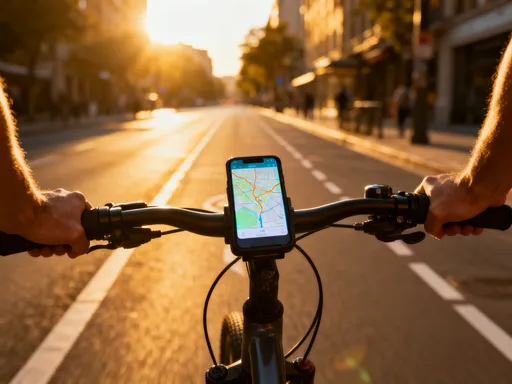
I watched my phone as I drove—just once. There, on the screen, was a tiny green dot moving steadily along the route home. And beside it, my mom’s phone showed the same view. I didn’t get a single call. When I walked in, my phone buzzed with a text: 'Saw you got home. Sleep well, sweetheart.'
That small moment changed everything. No tension. No guilt. Just love, delivered quietly. And it wasn’t just for me. A few weeks later, my teenage niece started using it too—just to let her mom know when she got off the school bus. No more frantic texts: 'Did you get home? Call me!' Now, her mom sees the dot appear at the house and breathes easier.
Another time, my dad traveled alone to visit his brother. In the past, Mom would have called every few hours: 'Are you there yet? Did you eat? Is the hotel nice?' This time, he shared his location for the trip. She watched the dot move across the map, saw it pause at rest stops, and finally settle at his brother’s house. She told me later, 'I didn’t feel the need to call once. I just knew he was okay.'
These weren’t dramatic changes. No flashing lights or complex settings. Just tiny moments of visibility that replaced layers of worry. The app didn’t talk for us. But it gave us space to talk about better things—how my day went, what my dad thought of the new diner, whether my niece liked her new teacher. The calls became conversations, not checklists.
Beyond Location: Building a Digital Safety Net
As we got used to the location sharing, we discovered other features that fit naturally into our lives. One of my favorites? Custom check-in reminders. I set one for my mom every evening at 8:30. If she doesn’t mark 'I’m safe' by 9, the app sends a gentle alert to me and my sister. Not because we expect anything to go wrong—but because it gives us peace of mind, especially on icy winter nights.
She doesn’t see the reminder as nagging. She calls it her 'digital hug.' 'It’s like you’re saying, “We’re thinking of you,” without having to call,' she told me. And honestly, it feels that way. It’s not about surveillance. It’s about showing up, even when we’re miles apart.
We also added emergency contacts—just in case. Each of us saved two people in the app, so if something happened, help could be reached quickly. We practiced how to send an emergency alert, just to be prepared. It wasn’t scary. It was comforting. Like having a seatbelt—hopefully never needed, but good to have.
Another quiet feature we love? Weather alerts. When a storm warning pops up in someone’s area, the app notifies us. Last winter, when a snowstorm hit my sister’s town, I got an alert before the news even mentioned it. I texted her: 'Heard about the storm—stay warm and take it slow tomorrow.' She said that small message made her feel seen and cared for.
These tools didn’t turn us into tech experts. We didn’t need to be. They were simple, unobtrusive, and designed for real life. No learning curve, no jargon, just quiet support woven into the background of our days. Over time, they became part of our family’s rhythm—a digital extension of the care we’ve always shared.
The Unexpected Gift: More Freedom, Deeper Connection
Months passed. The calls didn’t stop—but they changed. Instead of 'Are you home yet?' I’d hear, 'How was your meeting?' or 'Did you try that new salad place?' My mom wasn’t asking to check up. She was asking to connect. And that shift made all the difference.
I felt more trusted. She felt more at ease. And strangely, we started talking more—not because we had to, but because we wanted to. The space that used to be filled with anxiety was now open for real conversation. I told her about a book I was reading. She shared a recipe she’d tried. We laughed about a squirrel that keeps stealing from her bird feeder.
Even my dad, who used to roll his eyes at anything 'techy,' now checks the app when Mom’s out running errands. 'Just making sure the green dot’s moving,' he’ll say with a smile. It’s become a quiet ritual, a way of saying 'I care' without saying a word.
The biggest surprise? I started using it too—not just to share my location, but to check on them. When my mom has a doctor’s appointment, I turn on sharing so she knows I’m thinking of her. When my dad’s mowing the lawn on a hot day, I send a little heart emoji through the app. It’s not about control. It’s about presence. A way to say, 'You’re not alone,' even when we’re apart.
Trust grew in both directions. I didn’t feel watched. I felt held. And they didn’t feel shut out. They felt included, in a way that respected everyone’s independence. It wasn’t perfect. Sometimes we forgot to turn sharing on. Sometimes the battery died. But we learned to be gentle with each other—and with the tech. It was a tool, not a rule.
A Simpler Kind of Smart: Why This Works for Real Life
Looking back, I realize the magic wasn’t in the app itself. It was in what it represented—a shared intention to care, to listen, to protect without suffocating. The technology didn’t fix our family. We did. The app just gave us a new way to show up for each other.
It worked because it was simple. No complicated dashboards. No endless notifications. Just a few thoughtful features that fit into the way we already live. It didn’t demand our attention. It respected it. And because we introduced it with honesty and care, it became something we all embraced—not as a fix, but as a gesture.
I’ve talked to other moms, sisters, daughters since then. So many tell the same story—loved ones who worry, calls that pile up, the guilt of feeling torn between independence and reassurance. And I always say the same thing: start with a conversation. Not with a download. Ask, 'How can I help you feel more at ease?' Listen. Then, if it feels right, explore a tool together.
You don’t need the fanciest app or the latest gadget. You just need one small step toward understanding. Maybe it’s location sharing. Maybe it’s a daily check-in reminder. Maybe it’s something entirely different. The point isn’t the tech—it’s the message behind it: 'I hear you. I care. And I want us to feel close, in a way that works for both of us.'
Today, when my phone lights up and I see that green dot—mine, moving through the world, connected to theirs—I don’t feel watched. I feel loved. And sometimes, that’s the most powerful technology of all.