How I Cracked the Jewelry Investment Code Without Losing My Shirt
Ever looked at a diamond ring and thought, “Could this actually be smarter than a savings account?” I did—and I dove in, hard. What I found wasn’t just shiny trinkets, but a hidden market full of quiet profits, brutal pitfalls, and surprising rules. This isn’t about glamour; it’s about strategy. Let me walk you through how jewelry can work for your portfolio—if you know what to watch for and when to walk away. Behind every piece that catches the light is a story of supply, demand, craftsmanship, and sometimes, silent appreciation. But only the informed investor learns to separate the lasting assets from the beautiful distractions.
Why Jewelry? Unpacking the Allure Beyond Bling
Jewelry investment is not a pursuit of vanity; it is a deliberate choice to own tangible value. In a world where digital assets fluctuate with headlines and bank interest rates hover near historic lows, physical assets like fine jewelry offer a rare combination: beauty and resilience. Unlike cars or electronics, which depreciate the moment they leave the showroom, certain pieces of jewelry do not lose value—they can quietly gain it over time. The key lies in understanding that not all jewelry is created equal. What makes one diamond ring a mere accessory and another a long-term store of wealth is a set of measurable, often overlooked factors.
The foundation of jewelry’s investment appeal rests on the intrinsic value of its materials. Gold, platinum, and palladium have been valued for centuries not just for their luster but for their scarcity and utility. These metals are finite, mined from the earth under increasingly difficult conditions, and their supply is not easily expanded. When global economic uncertainty rises, investors naturally turn to physical assets that cannot be devalued by inflation or government policy. Fine jewelry, particularly pieces with significant metal weight and high purity, functions as a form of portable wealth. A 14-karat gold bracelet may carry emotional significance, but it also contains a measurable amount of gold whose market value can be tracked daily.
Yet material value alone does not make a piece investment-grade. The true power of jewelry as an asset comes from the combination of rarity, artistry, and historical context. A vintage Cartier brooch from the 1950s, for example, is more than the sum of its diamonds and platinum. It carries the weight of a storied brand, a moment in design history, and a limited production run. Such pieces are not mass-produced; they were crafted for a select clientele, often by hand, using techniques that are now rare. This scarcity creates demand among collectors, which in turn supports long-term price appreciation. Over decades, well-preserved, documented pieces from master jewelers have consistently outperformed broad luxury goods indices.
However, a critical mistake many new investors make is equating high retail price with long-term value. A newly purchased luxury ring from a department store may cost thousands, but its resale value could be less than half. Why? Because the retail markup on fine jewelry is often substantial—sometimes 100% or more. The moment it leaves the store, it becomes a used item, and unless it has unique qualities, it will not command a premium in the secondary market. This is the difference between a consumer purchase and an investment-grade asset. The former satisfies an immediate desire; the latter is acquired with the intention of holding, preserving, and eventually selling at a gain.
To build wealth through jewelry, one must shift perspective. Instead of asking, “How much does this cost?” the investor should ask, “What makes this rare? Who made it? Is it certified? Can I verify its history?” These are the questions that separate emotional buyers from strategic owners. The most successful jewelry investors are not those with the flashiest collections, but those who treat each acquisition as a calculated addition to a diversified portfolio. They understand that while a piece may be beautiful, its true worth lies in its ability to retain or increase value over time—regardless of trends or personal attachment.
The Market Moves: How Supply, Demand, and Trends Shape Value
The jewelry market operates on a different rhythm than the stock exchange. It does not open and close with a bell, nor are its prices updated in real time on a ticker. Instead, it moves in slow, often invisible waves shaped by global culture, geology, and human behavior. Understanding these forces is essential for anyone who wants to invest wisely. While Wall Street reacts to earnings reports and interest rate decisions, the jewelry market responds to wedding seasons in Mumbai, royal engagements in Europe, and the depletion of mines in remote corners of the world. These factors do not always make headlines, but they quietly influence prices in ways that can create opportunities for the informed buyer.
Take, for example, the annual spike in diamond demand during the Indian wedding season. India is one of the largest consumers of gold and diamonds globally, and marriages are central to jewelry purchases. When hundreds of thousands of families buy gold bangles and diamond necklaces within a few months, the effect ripples through global markets. Wholesale buyers in Antwerp or Dubai notice the increased orders, and prices for polished diamonds begin to rise. This is not speculation—it is direct supply and demand. An investor who understands this cycle might choose to buy diamonds just after the wedding season, when demand has cooled, and hold them until the next peak, potentially realizing a modest but predictable gain.
Similarly, cultural moments can create sudden surges in value for specific gemstones. When a public figure wears a particular piece—say, a Colombian emerald ring at a high-profile event—it can ignite interest among collectors and designers. Media coverage amplifies the effect, and within weeks, demand for similar stones increases. This phenomenon is not limited to celebrities; royal families have long influenced jewelry trends. The sapphire engagement ring worn by Princess Diana, now worn by Catherine, Duchess of Cambridge, sparked a lasting revival in sapphire popularity. Such moments do not guarantee long-term value, but they can create short-term opportunities for resale or increased appraisal value.
On the supply side, the finite nature of gemstone and precious metal sources plays a crucial role. Platinum, for instance, is far rarer than gold. Most of the world’s supply comes from a few regions—South Africa, Russia, and Zimbabwe—and mining operations face environmental, political, and economic challenges. As existing mines deplete and new discoveries become scarcer, the long-term availability of platinum decreases. This natural scarcity supports price stability and can lead to appreciation, especially when industrial demand—such as in automotive catalytic converters—remains strong. For jewelry investors, this means that well-crafted platinum pieces, particularly those from the early 20th century when platinum was widely used in fine settings, may become increasingly valuable over time.
Another major force reshaping the market is the rise of lab-grown gemstones. Created in controlled environments, these diamonds and colored stones are chemically identical to their natural counterparts but often sell at a fraction of the price. While they offer affordability and ethical appeal, they also disrupt traditional pricing models. A natural diamond’s value is tied to its rarity and the millions of years it took to form deep within the earth. Lab-grown stones, though beautiful, do not carry the same scarcity premium. As a result, investors focusing on long-term appreciation must be cautious. A piece centered on a lab-grown diamond may be stunning, but it is unlikely to appreciate in value—and may even depreciate faster than natural stones. This does not mean lab-grown gems have no place in a collection, but they should not be mistaken for investment assets.
The jewelry market, therefore, is not monolithic. It is a collection of micro-markets—vintage Art Deco pieces, untreated colored gemstones, signed designer jewelry—each with its own drivers. The smart investor monitors these trends not with speculation, but with awareness. They do not chase fads, but they recognize when a trend reflects a deeper shift in supply or cultural preference. By aligning purchases with these quiet forces, they position themselves not at the mercy of the market, but in step with it.
What Actually Holds (and Grows) Value? The Investment-Grade Checklist
Not every piece of jewelry is worthy of an investment portfolio. The difference between a keepsake and a capital asset comes down to four key criteria: provenance, rarity, craftsmanship, and certification. These are not abstract ideals—they are measurable qualities that determine a piece’s ability to retain or increase value over time. A necklace may sparkle under the lights, but without these pillars, it is unlikely to perform as an investment. Understanding and applying this checklist is the most reliable way to avoid costly mistakes and focus on pieces with real potential.
Provenance refers to a piece’s history and origin. A signed item from a renowned house like Van Cleef & Arpels, Cartier, or Tiffany & Co. carries more than brand recognition—it carries trust. These firms have maintained rigorous standards for decades, and their archives often allow experts to verify a piece’s authenticity and production date. A documented history—such as original receipts, family lineage, or exhibition records—adds further credibility. For example, a 1920s Cartier Art Deco bracelet with its original box and invoice is not just a beautiful object; it is a verifiable artifact. This level of documentation reduces uncertainty for future buyers, increasing liquidity and value.
Rarity is perhaps the most powerful driver of long-term appreciation. Natural gemstones that are untreated, especially in larger sizes, are exceptionally scarce. An untreated Burmese ruby over one carat, for instance, is a rarity in the modern market. Heat treatment is common in the gem trade to enhance color, but fully natural stones command significant premiums. The same applies to colored diamonds—pink, blue, or green diamonds that are graded as natural and untreated can increase in value by double digits annually in strong markets. Even within metals, rarity matters. Platinum was heavily used in fine jewelry during the early 20th century, but its use declined during wartime due to industrial demands. Vintage platinum pieces, particularly those with intricate hand-engraving or filigree work, are now highly sought after.
Craftsmanship separates mass-produced items from museum-quality work. Investment-grade jewelry is not stamped out by machines; it is hand-finished by skilled artisans. Look for hallmarks of quality: precise stone setting, symmetry, and attention to detail. A well-made piece will show minimal wear over time and can be restored with care. In contrast, poorly constructed jewelry may have weak prongs, uneven metalwork, or glued components that degrade. These flaws not only affect durability but also perception. A future buyer or appraiser will discount a piece with structural issues, regardless of its materials.
Certification is the final, non-negotiable requirement. Without a report from a respected lab like the Gemological Institute of America (GIA) or the American Gemological Laboratories (AGL), even the most stunning gemstone lacks credibility. These reports verify a stone’s weight, cut, color, clarity, and treatment status. They are the closest thing the market has to a title deed. A diamond without a GIA report is like a car without a VIN check—its history is unknown, and its value is speculative. The same applies to pearls, colored stones, and even vintage watches. Third-party verification protects the buyer and ensures the piece can be resold with confidence.
Condition is also critical. A piece that has been altered—such as a resized ring with a visible seam, a replaced clasp, or a repaired setting—may lose significant value. Originality matters. Collectors and investors prefer pieces that are as close to their original state as possible. Even minor repairs, if not done by a master jeweler, can raise red flags. Therefore, when evaluating a potential investment, inspect it thoroughly. Use a loupe to check for wear, verify hallmarks, and request recent appraisal documents. A piece that meets all four criteria—provenance, rarity, craftsmanship, and certification—is far more likely to appreciate over time than one that merely looks expensive.
Entry Points: Where and How to Buy Without Overpaying
Entering the jewelry market wisely begins with choosing the right source. The purchase price is only the first cost; the real challenge is avoiding overpayment and ensuring authenticity. Many beginners make the mistake of buying from high-end retailers, only to discover that the resale value is a fraction of the original cost. The markup on new luxury jewelry can be steep, and the secondary market does not reward retail pricing. Instead, strategic investors look to alternative channels where value and authenticity intersect.
Auction houses like Sotheby’s, Christie’s, and Bonhams offer a trusted environment for acquiring investment-grade pieces. These firms provide detailed catalogs, expert authentication, and transparent bidding processes. High-profile auctions often feature rare and documented items, such as estate jewelry from noble families or museum deaccessions. While buyer’s premiums can add 20–30% to the hammer price, the assurance of authenticity and provenance often justifies the cost. For serious investors, attending previews and consulting with specialists before bidding is a crucial step.
Private dealers and specialized galleries offer another avenue, often at more competitive prices. Reputable dealers who focus on vintage or period jewelry maintain deep knowledge and long-standing relationships with collectors. They may acquire pieces through estate sales, private collections, or international markets. The advantage here is personalized service and the ability to negotiate. However, due diligence is essential. Always request third-party certification, review past appraisal reports, and, if possible, bring in an independent gemologist for verification. A trustworthy dealer will welcome these requests; one who resists should raise concerns.
Estate sales and trusted pre-owned platforms can also yield excellent value. Unlike new retail, these sources often reflect more realistic market pricing. A well-maintained vintage gold watch or a certified sapphire ring from a dissolved estate may sell below replacement value. Online marketplaces require extra caution—photos can be misleading, lighting can distort color, and descriptions may omit flaws. Always insist on high-resolution images, full disclosure of condition, and verifiable certification. When possible, arrange for in-person inspection or use a trusted intermediary.
The most important rule is to never skip verification. I learned this after nearly purchasing a “rare” Ceylon sapphire that, upon independent testing, was found to have undergone significant heat treatment not disclosed by the seller. While heat treatment is common, excessive or undisclosed enhancement can drastically reduce a stone’s investment potential. That experience taught me to treat every purchase as a transaction requiring proof, not trust. Always use a GIA-graded report or equivalent as the baseline standard. When in doubt, walk away. The right piece will come along—but only if you protect yourself from the wrong ones.
The Hidden Costs: Liquidity, Storage, and the Resale Reality
Jewelry is not a liquid asset. Unlike stocks or bonds, which can be sold in minutes, converting a fine piece into cash takes time, effort, and often compromise. This lack of liquidity is one of the most underestimated challenges in jewelry investing. An investor may own a beautiful emerald ring worth $25,000 on paper, but selling it quickly could mean accepting $18,000—or less. The gap between appraised value and realized sale price is where many investors lose money.
Several factors contribute to this. Auctions, while reputable, can take months from consignment to payout. There are listing fees, buyer’s premiums, and the uncertainty of final bids. Private sales require networking, marketing, and trust-building with potential buyers. Even with a certified piece, finding the right buyer at the right time is not guaranteed. The process is slow, and timing matters. Selling during a market downturn or low-demand season can result in significant losses.
Beyond liquidity, there are ongoing costs. Insurance is essential—fine jewelry should be covered under a scheduled personal property policy, which typically costs 1–2% of the item’s value annually. Secure storage is another necessity. A home safe may suffice for smaller pieces, but high-value items should be kept in a bank safety deposit box or a professional vault. Appraisals should be updated every three to five years to reflect current market values, and these services come at a cost. Over a decade, these expenses can erode returns, especially if the piece does not appreciate significantly.
Perhaps the greatest hidden cost is emotional attachment. When an investor falls in love with a piece, they are less likely to sell it at the optimal time. Sentiment overrides strategy. A necklace passed down through generations may have deep personal meaning, but if it lacks certification or market demand, it may not be a true financial asset. The rule is simple: if you cannot imagine selling it, it should not be treated as an investment. True investment jewelry is acquired with detachment, held with discipline, and sold when the numbers justify it—not when the heart resists.
Risk Control: Diversification, Timing, and Knowing When to Walk Away
Jewelry should never dominate a financial portfolio. It is best used as a satellite holding—typically no more than 5 to 10% of total non-cash assets. Concentrating too much wealth in gemstones exposes investors to market-specific risks, including shifts in taste, economic downturns, and regulatory changes. Diversification remains the cornerstone of sound investing, and jewelry is no exception. It should complement, not replace, traditional assets like stocks, bonds, and real estate.
Timing is equally important. The luxury market is cyclical. During economic booms, demand for high-end jewelry rises. In recessions, collectors may hold onto cash, reducing liquidity. Selling during a downturn can mean accepting low offers. Conversely, waiting for the right moment—such as a surge in demand for a particular gemstone—can maximize returns. However, greed often clouds judgment. Some investors hold onto pieces for years, hoping for ever-higher prices, only to miss ideal exit points. Setting clear benchmarks—such as a 50% gain or a specific market signal—helps remove emotion from the decision.
Knowing when to walk away is perhaps the hardest skill to master. It requires discipline to sell when the data supports it, even if the piece is beautiful. The most successful investors treat jewelry like any other asset: they track performance, reassess regularly, and act when the math says to. They do not wait for perfection. They understand that profit is realized only when a sale is completed.
Building a Strategy: From First Purchase to Long-Term Wealth Play
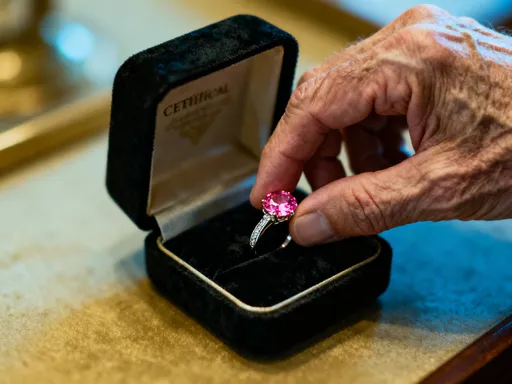
Starting a jewelry investment strategy does not require a large budget or years of experience. Begin with a single, high-potential piece: a GIA-certified natural pink sapphire under two carats, a vintage gold pocket watch from a respected maker, or a signed Art Deco platinum ring. Focus on quality over quantity. Acquire one piece that meets the investment checklist—certified, rare, well-crafted, and documented.
Track its market presence annually. Monitor auction results, dealer listings, and price trends for similar items. Reassess every three years with a professional appraisal. Over time, add complementary pieces that balance metal content, gem quality, and design significance. Aim for a micro-portfolio that reflects a range of values and eras.
Treat each acquisition as a long-term hold—ideally 10 to 15 years or more. Short-term trading in fine jewelry is risky and often unprofitable due to costs and liquidity constraints. Patience allows value to compound quietly. Always keep meticulous records: original receipts, certification reports, appraisals, and service logs. In the world of jewelry investment, documentation is not just paperwork—it is proof of value, and proof of value is profit.